

0 引言
全球深水油气资源十分丰富,勘探开发潜力巨大,成为全球油气勘探的热点和增储上产的重要领域。巴西东部海域、美国墨西哥湾以及西非几内亚湾一起被称为全球深水油气勘探的金三角,油气可采资源量占全球深水油气可采资源总量的40%~50%。
1953年巴西国家石油公司(Petrobras)成立,前15年重点关注陆上大型盆地古生界勘探,但收效甚微;随后向海上勘探转移,1968年在巴西东北部的舍吉佩-阿拉戈斯(Sergipe-Alagoas)盆地作业水深15 m处发现了第1个海上油田—瓜里塞马(Guaricema)油田。1974年,在坎波斯(Campos)盆地首次发现加鲁帕(Garoupa)油田,拉开进军坎波斯盆地的序幕。1984年发现作业水深400 m的马里姆巴(Marimbá)油田,需要使用水下机器人替代潜水员作业,1985年发现的马林(Marlim)巨型油田,作业水深进一步达到660~1 100 m。
为了解决深水勘探开发面临的技术瓶颈,巴西国家石油公司于1986年起实施多期深水研发攻关计划(PROCAP),系统攻克了作业水深1 000~3 000 m的开发技术,2006年在桑托斯盆地盐下发现巨型超深水油田—图皮油田(Tupi,又称卢拉油田),随后相继获得一系列世界级大型油田,使得巴西国家石油公司成为全球深水油气勘探开发的技术领导者之一。
总结和回顾巴西从陆上、浅水、深水、超深水到盐下的勘探开发历程、成功做法和理论技术进展,对全球深水油气勘探开发具有较大的借鉴意义。
1 巴西陆上和浅水勘探
1.1 勘探从陆上克拉通盆地向断陷盆地转移
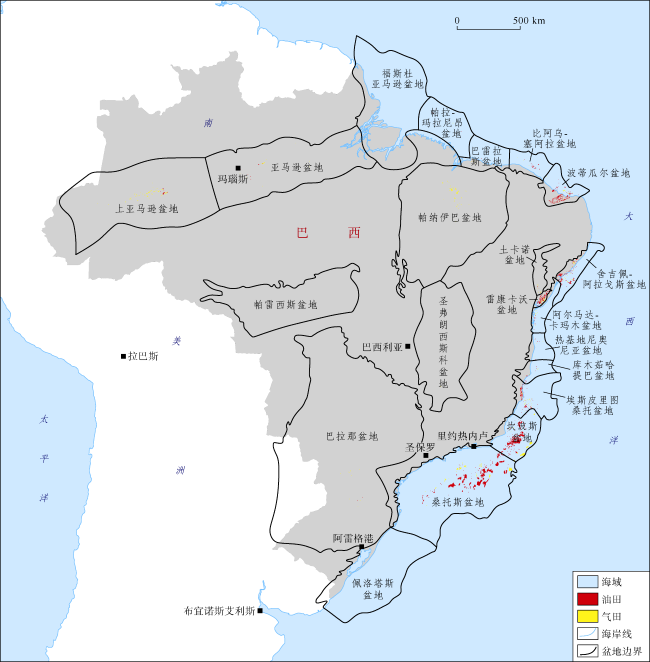
巴西拥有丰富多样的陆上和海上沉积盆地(见图1 ),所发育的地层从前寒武系到现代沉积。陆上盆地面积有500×104 km2,主要是面积巨大的古生界克拉通盆地(如亚马逊、帕纳伊巴、巴拉那盆地等)和东部沿海面积较小的断陷盆地(如雷康卡沃、土卡诺盆地等)。
第二次世界大战之后(1945年),巴西国内石油消费量达到13.7×10⁴ bbl/d,但国内石油产量只有2 700 bbl/d,石油自给率不足2%。国内需求促进了巴西石油工业的发展。1953年10月,巴西国家石油公司(Petrobras)成立,其目标是促进石油及其衍生品的研究、勘探、开采、炼制、贸易和运输,努力实现巴西在石油方面的自给自足,开启了巴西石油工业的新篇章。
巴西国家石油公司成立之后,最初在美国地质学家Walter K. Link领导下,将精力集中在陆上大型古生界克拉通盆地[4],但仅获得了零星小规模发现。随着时间的推移,巴西本土地质学家逐渐成长,把工作重心转移到雷康卡沃断陷盆地,开展沉积体系、生物地层分带、断块构造等多方面的研究。
1963年,在与雷康卡沃盆地相邻的舍吉佩-阿拉戈斯盆地陆上发现了卡莫波利斯(Carmópolis)油田,可采储量达4.6×10⁸ bbl,为当时巴西最大的发现,是巴西石油工业的一个重大里程碑。到1965年,巴西累计发现石油地质储量达到50×108 bbl,国内石油产量达9×10⁴ bbl/d,仍难满足国内日渐增长的消费需求。截至2023年,巴西陆上发现油气田500余个,油气田规模普遍较小。
1.2 浅水被动大陆边缘盆地勘探与盐丘的发现
2 坎波斯盆地盐上重大突破
2.1 浊积岩成藏模式指导坎波斯盆地盐上油气勘探获得重大突破
20世纪70年代是巴西国家石油公司取得重大突破的10年。1973年的石油危机,以石油价格急剧上涨为标志,加剧了巴西对石油自给自足的追求,加速了海上油气勘探开发。
1974年在坎波斯盆地作业水深120 m处发现了加鲁帕(Garoupa)油田[7],储层为阿尔布阶孔隙性碳酸盐岩,油柱高度约100 m,为轻质原油(相对密度为0.87),可采储量2.3×10⁸ bbl,原油产量达3 000 bbl/d,坚定了巴西国家石油公司在坎波斯盆地进一步勘探的信心。
1975年,在阿尔布阶/塞诺曼阶浊积岩(166 m水深)中发现了纳莫拉多(Namorado)油田,为巴西首个可采储量超5×10⁸ bbl的油气发现,成为巴西第1个海上大型油田,实现了另一个重要里程碑。1976年,在始新统浊积岩中发现了恩乔瓦(Enchova)油田,随后又在浊积岩中取得了一些发现,坎波斯盆地浊积岩由此成为巴西国家石油公司的研究重点。
20世纪80年代以来的勘探实践,积累了坎波斯盆地大量地质和地球物理数据,并由此建立了一套盐上浊积岩成藏模式,指导了坎波斯盆地的油气勘探突破。坎波斯盆地的盐上含油气系统中,烃源岩为下白垩统盐下Lagoa Feia组湖相页岩,生成的油气通过盐窗向盐上的多孔砂岩和碳酸盐岩储层中运移聚集[11]。
截至1984年底,巴西累计可采储量达43×108 bbl油当量,产量近50×104 bbl/d,可满足国内消费量的50%,石油仍然不能完全自给,迫切需要新的勘探突破。
2.2 深水重力流地质理论新进展和三维地震技术促进Marlim和Roncador等巨型油田发现
20世纪80年代中期以后,坎波斯盆地深水获得了一系列油气大发现,主要有赖于2项勘探理论技术的突破:深水沉积模式新认识和三维地震采集处理解释技术。
2.2.1 深水重力流沉积模式的精细构建
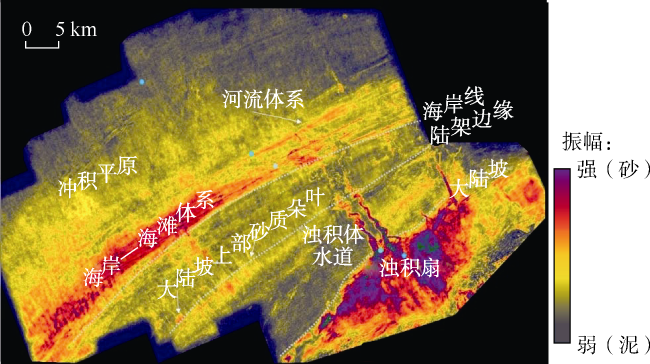
2.2.2 高质量三维地震采集处理解释技术
地球物理采集处理解释技术对深水探井部署和油气大发现具有直接的推动作用。早在20世纪80年代初,对坎波斯盆地深水区进行的地震采集及普查使得识别和预测油气成为可能,标志着勘探工作拓展到了深水区和超深水区。20世纪80年代末,进入广泛使用三维地震数据指导油气勘探活动的新阶段,特别是在坎波斯盆地。
深水环境中采集的高质量三维地震数据促使巴西国家石油公司研发了地震处理技术,利用三维地震数据作为储层表征工具来优化井位。地震数据的使用推动了油藏模型的稳健发展。
从20世纪90年代中期开始,勘探通常采用振幅随炮检距变化(AVO)和直接烃类指示(DHI)等技术,并结合巴西国家石油公司研究中心(CENPES)的岩石物理实验室数据,为地震解释提供定量数据。被称为“岩石地震”(Petroseismic)的岩石物理建模为在三维和四维地震解释中使用弹性属性提供了基础。
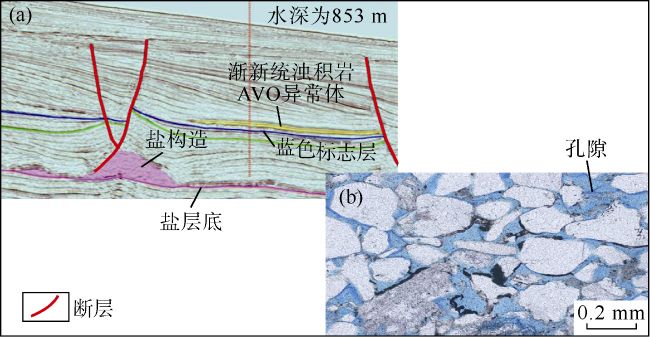
通过地震剖面中的一个AVO显著异常体(见图3a ),在渐新统一套高孔高渗浊积岩中发现了马林(Marlim)油田,其拥有超60×108 bbl石油地质储量,可采石油储量超过25×108 bbl,作业水深660~1 100 m,相对密度为0.92的石油聚集在渗透率高达2 μm2的脆性储层中(见图3b )。1992年,因马林油田深水生产系统的研发,巴西国油首次获得美国国际石油天然气展览会(OTC)大奖。
2001年巴西国家石油公司在坎波斯盆地北部朱巴特(Jubarte)油田上白垩统浊积岩储层的油气发现,证实了地震数据所指示的平点反射异常对浊积岩和油气预测的作用。这对于朱巴特油田的勘探,甚至对于舍吉佩-阿拉戈斯盆地和埃斯皮里图桑托盆地未来深水发现以及整个盐下勘探开发至关重要[16]。
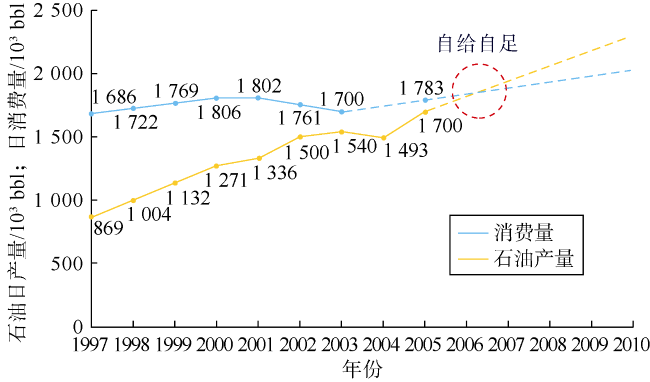
基于上述油气发现及技术实践,巴西国家石油公司1996年在坎波斯盆地北部钻了一口破世界纪录的野猫井(RJS-436A),水深1 853 m,发现了Roncador巨型油田。该井钻遇马斯特里赫特阶浊积岩净厚度153 m,油田石油地质储量为90×108 bbl油当量,可采储量为26×108 bbl油当量。2000年,Roncador油田为巴西国家石油公司获得第2项OTC年度大奖,坎波斯盆地深水勘探开发成果为后续桑托斯盆地盐下勘探开发奠定了基础。2006年,巴西完全实现油气自给自足(见图4 ),近90%的油气产量来自浊积岩储层,尤其是坎波斯盆地深水区域。
3 桑托斯盆地深水盐下世界级勘探发现
3.1 盐下含油气系统新认识坚定深水勘探方向
21世纪初全球超深水领域接连获得的重大发现,使得桑托斯盆地迎来勘探高光时刻。巴西国家石油公司和许多国际油公司都在该盆地获得大量区块。巴西国家石油公司在水深1 900~2 400 m的超深水“集群区块”中获得特许经营权。整个地区被世界上最大的三维地震项目所覆盖,总面积超过2×10⁴ km2,提供了桑托斯盆地外部隆起的详细地质分析结果,揭示它是一个正向构造地质单元。
2005年,巴西国家石油公司在帕拉提(Parati)远景区部署了第1口井(1-RJS-617D),旨在钻穿深部盐层,勘探盐上和盐下的多个目的层。该井位于盐层较薄的地区(见图5 ),以避免钻井出现工程问题。尽管面临许多挑战,钻探时间超过1年,但1-RJS-617D井最终完钻深度达到7 600 m。虽然该井揭示盐下碳酸盐岩储层孔隙度和渗透率很低,也没有获得商业性发现,但该井很好地证实了桑托斯盆地盐下含油气系统的活跃性。帕拉提地区含油气系统的确认为进一步开展盐下勘探工作提供了动力。
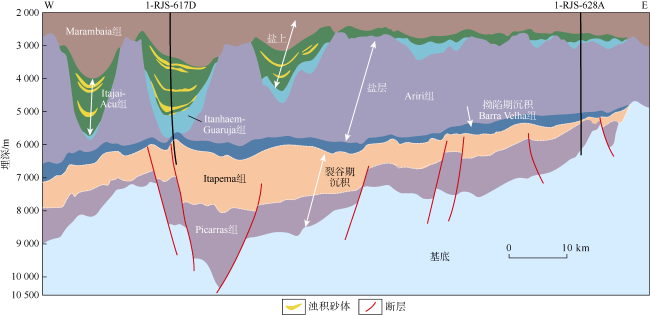
自2006年8月开始,在图皮(Tupi)地区水深2 126 m处钻探风险探井1-RJS-628A,储层上方Ariri组厚约2 000 m的蒸发盐岩段需要进行复杂的钻井作业(见图5 )。1-RJS-628A井证实盐下以下白垩统Barra Velha组灌木丛状生物灰岩、颗粒灰岩/砾屑碳酸盐岩和一些白云岩为代表的优质碳酸盐岩相的存在。在图皮地区,其沉积条件比在帕拉提井区观察到的要好得多,有利于孔渗条件更好的碳酸盐岩相发育。
图皮地区1-RJS-628A井发现了可观的碳酸盐岩油层,试油获得相对密度为0.89的轻质石油,气油比240 m3/m3,溶解气中二氧化碳含量达到12%[17]。第2口井甩开10 km钻探,发现类似的油层,证实图皮巨型油田的存在。
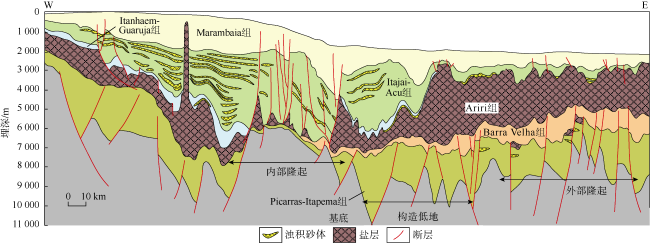
桑托斯盆地盐下碳酸盐岩储层的厚度可达400 m,上覆厚度约2 000 m的盐层、2 000 m的盐上地层以及2 000 m深的海水(见图7 ),因此,该盆地盐下的勘探开发也与坎波斯盆地盐上地层完全不同。
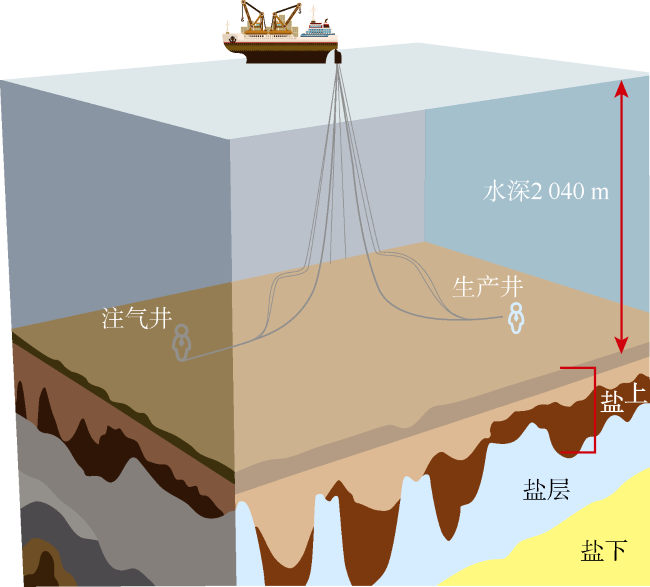
桑托斯盆地盐下获得的发现,促成了桑托斯盆地与坎波斯盆地进行对比研究,表明坎波斯盆地深水和超深水也存在类似的碳酸盐岩储层。位于坎波斯盆地北部的朱巴特(Jubarte)油田钻遇盐下层段,发现油气显示。依托盐上层系现有生产设施,于2008年对盐下碳酸盐岩储层进行试采,首次在坎波斯盆地盐下地层获得油流。
3.2 根据湖相碳酸盐岩沉积模式预测优质储层分布
盐下油气藏不确定性因素主要在于储层。针对盐下碳酸盐岩复杂储层的质量、连续性甚至成因的问题,巴西国家石油公司进行了广泛的实验室研究、露头研究和持续的岩心-测井-地震数据校正。
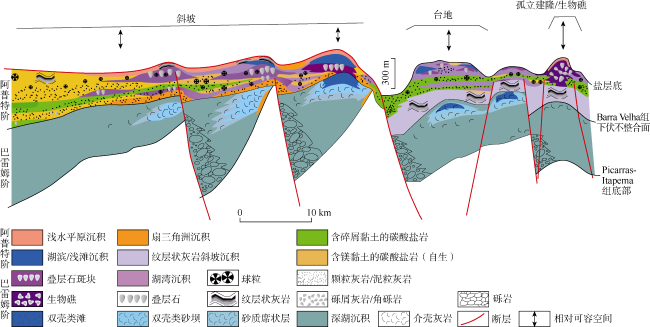
盐下主要发育两种类型的碳酸盐岩储层:巴雷姆阶-阿普特阶介壳灰岩和上覆的阿普特阶微生物碳酸盐岩。盆地中广泛分布非储层镁质黏土,与原地碳酸盐岩伴生(见图8 、图9 )。
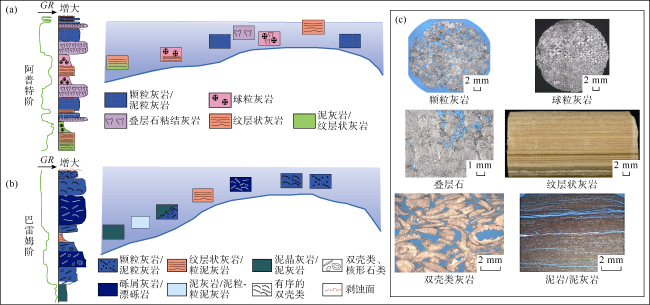


第一类重要的储层岩石类型是巴雷姆阶-阿普特阶介壳灰岩,由双壳类生物碎屑组成,形成颗粒灰岩、砾屑灰岩和漂砾岩,沉积在断陷期伸展断裂形成的隆起上。在横向上被发育在构造低地、有机质丰富的细粒岩石(泥灰岩和页岩)所包围。
高能岩相保存有不同丰富程度的壳类。成岩过程常见溶蚀现象和方解石胶结,较少见硅质胶结,因此经常会观察到铸模孔和孔洞。粒间孔隙较少见,通常与高渗透率相关。介壳灰岩具有宽泛的孔隙度和渗透率范围,反映了其沉积结构的发育和复杂的成岩过程;最好的储层孔隙度可以达到20%、渗透率高达3~4 μm2。介壳灰岩是巨型油田布兹奥斯和梅罗的重要储层[21]。
对坎波斯盆地介壳灰岩储层模式的构建始于20世纪70年代Badejo、Linguado和Trilha油气田的发现。21世纪初,在坎波斯盆地的Baleia Azul、Baleia Franca和Baleia Anã油田又发现了新的介壳灰岩储层,极大地促进了对桑托斯盆地盐下介壳灰岩的了解。
第二类重要的储层是阿普特阶碳酸盐岩,也是盐下油气田中最重要的储层,包括原地和改造两种岩相。原地岩相主要以分布广泛的沉积序列和沉积构造样式为代表,包括叠层石、球粒灰岩和微生物纹层灰岩;从微晶核中已经变成化石的、细胞外的聚合物中推断出沉积过程受到了微生物的影响,而非纯粹的非生物过程。此外,根据同位素组成数据得到的结论与有机生物成因的观点是一致的[22]。
叠层石含有灌木丛状方解石成分,由于球粒灰岩中发育毫米级的纹层,表现出明显的分层。灌木丛状叠层石在大小和形状上不同,并且它们在排列上也表现出变化,其密度可以从更多到更少,对其孔隙度和渗透率特性具有显著影响。在类似灌木的形态中常常观察到白云石,含量通常较低,因此叠层石具有格架孔隙。有时可以观察到溶蚀现象,会形成一些孔洞。
球粒灰岩由球形颗粒(球粒)组成,通常是粗到非常粗的砂级颗粒,具有十字消光特征。球粒灰岩通常是层状的,具有白云石基质,表现出较低的渗透率和孔隙度。
改造型岩相则以颗粒灰岩和砾屑灰岩为代表,由内碎屑组成,主要包括叠层石的碎屑,其次为纹层灰岩和球粒灰岩的碎屑。似球粒和球粒是观察到的其他组分,构成了阿普特阶储层的重要组成部分。由于压实作用,使得原生孔隙部分丧失。方解石胶结在这些岩相中分散发育,局部填充粒间孔隙。颗粒溶蚀是观察到的另一种成岩过程。
粒间孔隙是储层主要的孔隙类型,同时也存在铸模孔和少量的孔洞。由于颗粒大小、物理-化学压实作用以及胶结作用,它们表现出宽泛的渗透率和孔隙度值,其中孔隙度可达到20%,渗透率在数百毫达西的范围内。
白云石较为常见,通常与原地岩相有关,常与球粒相关,较少与叠层石有关,可以形成非常紧密的镶嵌结构。局部地区可以观察到非伴生的白云石,有时具有鞍状白云石的特征,发育晶间孔隙。角砾岩已部分硅化,是重要的岩相,在建隆中常见。这些岩相发育的孔洞具有非常高的渗透率。
纹层状灰岩包括平滑和小圆齿状两种形态,具有从微晶到微球粒的多种沉积结构。其孔隙度变化范围很大,从非常低到高达30%。由于其细粒结构,具有较低的渗透率,大约为1×10⁻³ μm2。泥粒灰岩和粒泥灰岩的发育程度有限。
沉积模式中沉积充填结构和古地理地貌包括斜坡、台地和建隆,厚度达到数十米,横向延伸数千米,但在储层岩相方面有显著的变化。斜坡上主要是改造型岩相,而建隆位于具有高可容空间速率的碳酸盐台地边缘区域,主要由叠层石与改造岩相交错组成;以灌木丛状叠层石、泥粒灰岩/颗粒灰岩和白云石为特征的岩相分布,有时与镁-硅质泥岩和球粒状白云石相关(见图9 )。
3.3 核磁共振测井提升复杂碳酸盐岩油层评价精度
桑托斯盆地盐下勘探成功的另一个重要因素是使用核磁共振(NMR)测井来评价湖相复杂碳酸盐岩储层。核磁共振测井具有测量复杂岩性孔隙度的显著优势,不依赖于解释参数,使得储层体积计算更加准确。核磁共振测井还能识别影响储层渗透性、对注水效果具有重大影响的高黏度油层或沥青砂层;其中一些层可能会阻止含水层的垂向活动,如果沥青垫位于油水接触面,需要将注水井重新定位到油层。
此外,将核磁共振测井用于油基钻井液钻探的井以及进行井底流体取样的情况下,比如使用模块化地层动态测试仪(MDT)时,确实在盐下碳酸盐岩的评价中引发了一场重大革命。它可以区分油信号和水信号,量化盐下地层中油的存在和孔隙性地层厚度,极大地提高了对含水饱和度、含油饱和度计算的准确度以及对盐下地层体积计算的可信度。
合成基钻井液在盐下地层的发现和开发中起到重要作用,使得很厚的盐层能够钻透,并通过核磁共振测井促进了储层评价的进展[23]。
3.4 桑托斯盆地深水盐下陆续发现超级油田
2006年,桑托斯盆地盐下发现的图皮油田是巴西第1个巨型油田,可采储量为(50~80)×108 bbl油当量,是巴西石油工业的一个重大进步。随后,通过对盐下区域进行的密集勘探活动,陆续发现了一系列油气田,包括布兹奥斯(Buzios)、梅罗(Mero)、塞皮亚(Sepia)、伯比奥(Berbigao)、苏鲁鲁(Sururu)、阿塔普(Atapu)、沙坪霍(Sapinhoa)、伊塔普(Itapu)和拉帕(Lapa)等油田。这些发现进一步证实了该区域油气资源的巨大潜力。
目前,桑托斯盆地已成为全球油气勘探开发的热点区域之一,盐下正在生产的油田有9个,已发现未投产的区块超过20个;其中石油地质储量超10×108 bbl的油田或区块超过15个。这些大发现对全球油气能源领域产生了深远的影响,不仅巩固了巴西在全球能源供应中的地位,也为深水油气勘探策略和技术发展提供了重要的参考。
4 巴西深水油气开发关键技术与成效
4.1 深水研发计划
深水研发计划促进巴西深水作业能力全面提升。20世纪80年代中期,随着坎波斯盆地马里姆巴(Marimbá)、阿拉伯卡拉(Albacora)和马林(Marlim)等大型深水油田的相继发现,如何将深水勘探发现转化为开发产量成为关键瓶颈,巴西国油启动了深水研发计划(1986—1991年),目的是使巴西国家石油公司和承包商能够共同开发应用于大型深水油田的新技术[24⇓-26]。该项研发计划共计设置超过100个项目,涵盖从岩土工程、海洋气象数据收集到系泊、隔水管、水下设备和浮式生产装置等深水开发中所涉及的各类问题。通过将坎波斯盆地作为一个矿场规模的深水新技术研发实验室,巴西国家石油公司从技术人员、高级顾问到管理层全部参与,评估和批准各项研究计划,并优先考虑将最有应用前景的技术纳入矿场试验。深水研发计划的实施,使巴西国油基本具备了1 000 m水深的作业能力。随后,巴西国家石油公司进一步推动实施了PROCAP 2000(1993—1999年)和PROCAP 3000(2000—2010年)研发计划。PROCAP 2000 的目标是将作业水深扩展到2 000 m,尤其是水下增压系统取得突破,首次成功将电潜泵应用于深水油井。1998年,巴西国家石油公司成功实施裸眼砾石充填(OHGP)水平井完井,这一进展使得在坎波斯盆地易出砂地层优先使用水平井开发成为可能,显著提高了经济效益[24]。PROCAP 3000计划起始于2000年,主要用于解决Marlim South和 Roncador油田开发问题,使公司具备3 000 m水深作业能力,并降低深水油气开发成本,由 17个系统项目的88个子项目组成,主要包括井控、智能化油田、钻井与完井设备、超深水钻井和完井流体、盐下钻井、超深水油井完整性、人工举升、钢制悬束式立管、柔性立管、3 000 m水下设备、非常规生产体系、超深水固井、浮式采油储油卸油系统(FPSO)和单柱平台新船体设计、深部电阻率成像测井等[27⇓-29]。
4.2 深水环境窄压力窗口控压和加压钻井液帽钻井技术
深水作业环境下,由于上千米甚至数千米的上覆地层被海水取代,上覆压力与陆上或浅水井相比明显降低,导致地层破裂压力与地层孔隙压力之间的窗口变窄,压力控制不当易出现漏失或溢流;此外桑托斯盆地盐下巨厚盐层易出现缩径、垮塌和卡钻,给深水钻井带来诸多挑战[30]。控压钻井技术(MPD)通过主动管理井筒环空压力,旨在解决窄压力窗口下复杂钻井难题。通过开展研发攻关,开发一系列专用设备来满足技术和安全操作要求,并对钻机和设备进行适应性和资格认证,在巴西和其他海域已广泛使用自升式钻机和锚定式装置进行控压钻井作业,证实了这项技术的益处。而桑托斯盆地盐下碳酸盐岩储层受溶蚀作用,部分层段发育溶蚀孔洞和高角度裂缝,钻井过程中会出现严重漏失,即使采用控压钻井也难以实现钻井液正常循环,进一步研发和使用加压钻井液帽钻井(PMCD)技术,将钻井液体系设计成欠平衡,遇到严重漏失时不以堵漏为目标,通过向钻杆和环空持续注入工作液快速钻穿漏失层,从控压钻井模式切换到加压钻井液帽钻井模式。2014年4月,控压钻井技术在桑托斯盆地图皮油田首次应用,当遇到严重漏失井段时切换至加压钻井液帽钻井,最终顺利钻至目的层,成为采用动力定位钻井船和加压钻井液帽技术完钻的最深油井,代表了行业技术里程碑。
4.3 盐下巨厚油藏多段智能完井技术
深水环境下油水井一旦投产,后续测试和作业仍需要租用日费昂贵的钻井船,使得陆上及浅水导管架平台可以实施的诸多作业在深水油藏难以实施。尤其是针对桑托斯盆地盐下巨厚碳酸盐岩油藏,考虑储层非均质性及潜在的水窜、气窜,实施多段智能完井技术变得至关重要。通过将巨厚储层划分为两到三套开发层系,利用二至三级智能完井可以实现一套井网分层系开发,一旦某套层系出现了水窜、气窜,通过关闭油井或注入井在该层段的流动控制阀(ICV),可以高效、低成本解决窜逸问题,提高油藏开发的波及体积和采收率[31]。
4.4 水下采油与浮式生产平台开发模式
1973年第一次世界石油危机期间,国际油价的突然飙升造成石油销售和运输需求锐减。巴西国家石油公司购买市场上闲置的油轮,并改装成海上浮式生产平台,油轮配备大容量的储油能力并集成油气水分离和化学药剂处理的设施,形成浮式生产储卸油一体化平台(FPSO)。浮式生产平台的出现,进一步促进了水下采油树技术在坎波斯盆地的规模性应用。采用水下采油树和水面浮式生产平台开发深水油田,成为独树一帜的巴西模式。油田获得勘探发现之后,首先利用小型FPSO实施试采,获取储层动态数据,夯实开发可行性方案;随后采取分单元开发模式,选取一个生产单元实施先导试验;获得成功经验后,推广至全油田实施全面开发。
4.5 深水复杂作业环境下流动保障技术
深水作业环境下,海底为高压低温环境(约4 ℃),从水下井口至FPSO需要大口径的海管和立管长距离运输,使得井流物在输送过程中易析出蜡、沥青质沉积和生成天然气水合物,严重时可能堵塞管道,而流体组分中可能含H2S、CO2等酸性介质和砂砾等固体杂质,易引发管壁腐蚀、结垢等严重问题。确保深水油田开发过程中流体安全流动和减少生产损失至关重要,巴西国家石油公司在业界首次提出“流动保障”(Flow assurance)一词并在全球范围内广为人知。“流动保障”包括但不限于预防和减轻各种沉淀(如碳酸钙、碳酸锶、硫酸锶、硫酸钡、水合物和沥青质)的措施。这些过程可以在整个生产管柱中发生,从智能完井阀到流动管线,甚至在油水分离器[35-36]。了解这些物质在不同温度条件下的稳定性参数,选择注入适当的化学抑制剂,防止生产作业期间发生沉淀至关重要,同时也需要清除已经形成的结垢,对于确保深水油气田生产稳定不可或缺。流动保障的一个重要教训来自于2008年坎波斯盆地盐下地层的早期试采,ESS-103井最初产量约为2×10⁴ bbl/d,但用于中和去除硫化氢的清除剂性能存在缺陷,使得上部设施出现碳酸钙沉淀,导致该井停产,将清除剂替换后问题得以解决。此次事件为后续解决桑托斯盆地盐下如布兹奥斯油田的井下结垢问题提供了宝贵的经验,目前巴西国家石油公司在预防和清除结垢方面成为行业领导者。此外,桑托斯盆地盐下油藏普遍高含CO2[20,37 -38],迫使设备必须使用高等级防腐蚀材质,确保井筒、油管、立管和浮式生产卸油平台上部设施的完整性。尽管采取了这些措施,柔性立管仍然会出现CO2腐蚀裂纹。为了减轻未来的风险,实施的解决方案包括使用刚性管道和更多的保护措施[39],以增强在盐下油田部署的基础设施耐用性和可靠性,确保生产运营的持续成功。
4.6 全球最大规模CCUS-EOR工程
桑托斯盆地盐下大多数油藏油品为高气油比轻质原油,气体中普遍含有CO2(0~78%)。巴西国家石油公司履行环境、社会和治理(ESG)责任,选择不将高含CO2气体直接排放到大气中,而是在FPSO安装紧凑型膜分离系统对产出气进行净化,并将CO2或高含CO2产出气重新注入储层。除了环境效益外,高含CO2气体在储层可实现混相驱提高采收率,但增加了对浮式生产储卸油平台设计、建造和运营的复杂性,也一定程度上限制了每艘FPSO的最大建产规模。
根据统计,截至2023年底,巴西桑托斯盆地盐下已累计注入CO2超过4 000×104 t,年注入规模达到1 000× 104 t级。
5 结语
自20世纪80年代中期巴西深水首次获得油气发现以来,巴西国家石油公司克服深水勘探开发的各种挑战,在坎波斯盆地盐上浊积岩和桑托斯盆地盐下碳酸盐岩获得一系列重大发现,并通过深水研发计划促进深水作业能力全面提升,Marlim、Roncador、Tupi、Mero、Busios等勘探开发项目相继获得成功,一系列油气重大发现和开发工程成就得到国际认可,先后获得7次OTC年度大奖。
未来巴西深水勘探活动将继续聚焦桑托斯和坎波斯盆地盐下湖相碳酸盐岩,以及坎波斯、埃斯皮里图桑托和舍吉佩-阿拉戈斯等盆地与巴西赤道边缘盆地群的浊积岩。巴西最南端的佩洛塔斯(Pelotas)盆地一直是地质和地球物理研究对象,在2023年12月举行的矿权拍卖中,数十个区块中标并将开钻;由于西非纳米比亚的浊积岩最近获得新的油气发现,提高了对该盆地勘探成功的预期。为应对超深水更为复杂的作业环境,海底高压气液分离(HISEP)等创新技术的发展将进一步助力巴西石油天然气行业的可持续发展,预计在2030年左右巴西盐下将建成高峰产能。
巴西陆上勘探活动主要由巴西国家石油公司主导,集中在帕纳伊巴(Parnaíba)盆地的古生界(重点是天然气),以及东北部的雷康卡沃、波蒂瓜尔和舍吉佩-阿拉戈斯盆地的白垩系。预计未来几年,巴西南部面积广阔的巴拉那盆地将成为古生界天然气勘探的热点。尽管厚层玄武岩造成地震成像困难,但该盆地靠近巴西主要天然气消费中心,因此具有很大的吸引力。