

0 引言
中国煤层(岩)气经过30余年持续探索,突破了深度限制,由浅层煤向深层煤拓展;突破了开发厚度下限,由单一煤层向多、薄煤层拓展;突破了资源类型,由煤层(岩)气单一资源开发向煤系气立体开发拓展[1-6]。特别是2019年以来深层煤层(岩)气的勘探突破,引领煤层(岩)气产业进入快速发展期[1,7]。随着埋深增加,煤储层压力、温度和气体赋存状态发生显著变化,气体富集规律和产出模式也发生改变。不同学者从沉积环境、埋深、构造、水文和应力场等方面讨论了深层煤层(岩)气富集成藏的特殊性,也对比了不同埋深煤层(岩)气体赋存状态差异[8-14]。深层煤层(岩)气受“连续稳定的优质煤岩是成烃控储基础、良好的保存条件是成藏控产关键”二元控气模式约束[1],但是不同区带的富集成藏模式仍有一定的差异。
1 区域地质背景
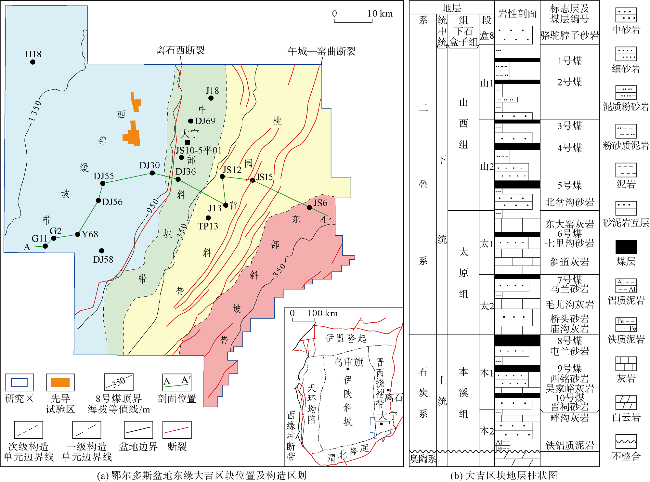
鄂尔多斯盆地位于华北克拉通西部,呈南北翘起、东西分带的不对称特征,发育伊盟隆起、天环坳陷、西缘冲断带、渭北隆起、伊陕斜坡和晋西挠褶带6个一级构造单元[19-21]。大吉区块位于鄂尔多斯盆地东南缘,整体为平缓西倾单斜构造[14,22],自西向东可以划分为西部缓坡带、中部斜坡带、桃园背斜带、东部斜坡带4个三级构造单元[1](见图1a)。西部缓坡带属于伊陕斜坡区,整体地层倾角小于2°,构造简单,断层基本不发育。中部斜坡带为西北倾单斜,地层倾角变化较大,断层在北部零星发育,向南逐渐减少。桃园背斜带断层发育,以午城—窑曲断裂带及伴生断层为主,多表现为背冲式的逆冲断层。东部斜坡带靠近盆地边缘,地层倾角大、断裂发育[23-25]。煤层(岩)气勘探开发主力层系为本溪组顶部8号煤层和山西组5号煤层(见图1b),8号煤层厚4~12 m,主体为8~10 m,呈北西—南东向展布,现今埋深为400~2 600 m[26]。
2 “同生异构”的地质内涵
2.1 “同生异构”组成要素
大吉区块位于鄂尔多斯盆地东部边缘向盆地腹部过渡的地带,不同区带展现出差异化的构造演化特征,主要体现在煤岩的热演化程度和现今的煤岩气产状上。本文“同生”一词,指的是同一套煤层在相同或相近的沉积环境中形成,并且经历了大致相同的构造活动期次;“异构”一词,指的是在大致同期沉积的一套煤层中,由于经历的构造演化强度差异,造成煤层埋深、抬升幅度和现今构造样式等存在差异。结合大吉区块深层煤岩(层)气田勘探开发实践,本文提出煤层(岩)气“同生异构”控藏控产的理论认识。“同生异构”是指同一盆地煤层经历相对一致的沉积演化过程和构造活动期次,但由于构造活动强度和应力场差异造成历史最大埋深(煤岩热演化程度)、现今煤岩气赋存深度和产状(煤层含气量及赋存状态)存在差异。
2.2 均一化沉积特征
8号煤层在陆表海沉积背景下发育,由于地层坡度低,海侵事件频繁,泥炭层遭到部分破坏,造成煤层厚度存在差异。煤层顶板总体以灰岩为主,受海侵范围影响存在差异[36],部分地区为泥岩和砂岩。中部斜坡带煤层相对较厚,主体分布在10~12 m,局部厚度大于12 m,西北部煤层厚度为5~8 m,西部缓坡带煤层厚度为6~8 m,区块南部煤层最薄,为3~5 m。总体来看,研究区煤层“同生”沉积,尽管沉积微相、古地貌等存在差异,但是同一时期的泥炭沼泽连续均一化成煤,煤层连续性好,分布稳定。
2.3 差异埋藏特征
晚石炭世—晚白垩世不同期次的构造活动控制了大吉区块含煤地层的整体沉降或者抬升。晚石炭世—二叠纪,地层进入缓慢沉降埋藏阶段,煤岩最大镜质体反射率(Ro)普遍小于0.5%,处于生物甲烷生成阶段,生气量较低,全区煤层演化具有一致性(见图2)。三叠纪,地层进入快速埋藏阶段(见图2),8号煤层开始进入成熟阶段(Ro值为0.5%~0.7%),煤的大分子结构中的甲基侧链断裂,开始产生以短链烃为主的液态烃类,西部8号煤层埋藏深度超过2 500 m,最深可达3 200 m。生烃动力模拟显示浅煤区J18井生烃率在0.5 mg/(g·Ma)以上,转化率可超过15%,DJ58井和H18井生烃率分别为1.0 mg/(g·Ma)和1.5 mg/(g·Ma),且转化率可超过20%。
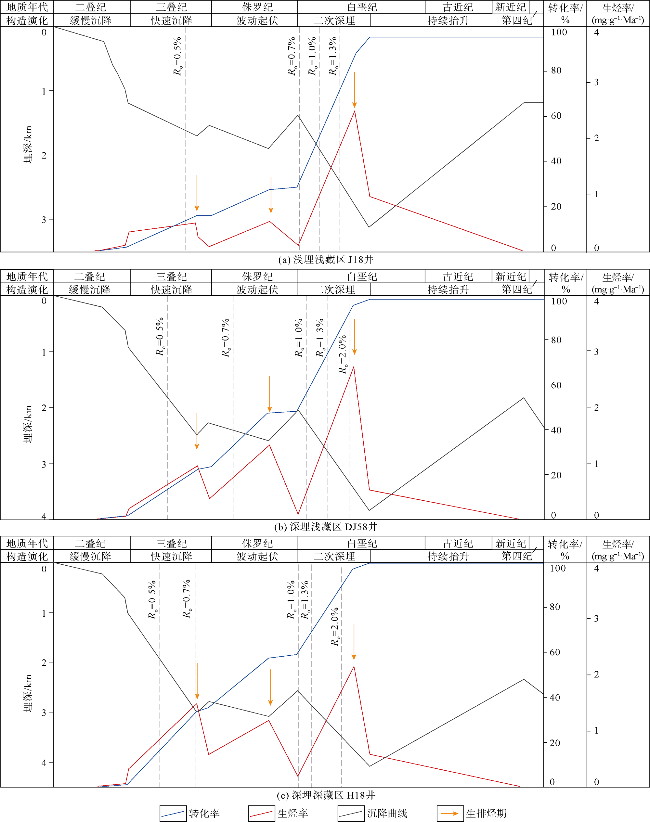
三叠纪末—侏罗纪,地层进入波动起伏阶段(见图2),进入生烃关键期,Ro值普遍超过0.5%。此时8号煤全面成熟,进入第2次生排烃峰值期,深层煤岩累计转化率(45%)大于浅层煤岩(30%)。此时Ro值主体为0.7%~1.0%。早白垩世,地层进入二次深埋阶段,地层持续沉降,南部埋深达4 400 m,受早白垩世异常古地热场作用[1],深埋煤层温度最高可达240 ℃以上,8号煤层总体达到最大埋深和最大历史温度,成熟度显著增大,中西部煤岩Ro值大于2.0%,局部大于2.5%,进入裂解生气阶段[37];东部埋深相对低,Ro值为1.3%~2.0%。浅埋深的J18井生烃率最大到2.0 mg/(g·Ma)以上,深埋深煤岩生烃率最大可超过2.5 mg/(g·Ma),不同埋深最大转化率均超过了95%。晚白垩世至今,煤系进入持续抬升阶段,生烃作用停滞(见图2、图3)。早白垩世末,受燕山运动晚期构造热事件、岩石圈减薄及岩浆活动的耦合作用影响,8号煤层整体经历了大规模持续抬升,造就了现今煤层埋深和构造样式差异[27,38]。
3 “同生异构”控藏模式与差异富气特征
3.1 差异生烃特征
3.2 差异成藏特征
在深埋深藏区,煤层构造改造微弱,煤岩致密,顶底板封闭性良好,强封闭条件下吸附气连续聚集,气体呈现吸附过饱和。在微幅构造相对高点处,煤层处于相对低应力,储层相对高渗,甲烷发生二次运聚至构造高点聚集。微幅构造低点处于强应力环境,煤层渗透率低,侧向自封闭性强,气体总体处于原位滞留富集状态。深埋浅藏区地表水下渗微弱,水力封堵弱,游离气侧向逸散,但是大部分吸附气留存。浅埋浅藏区构造抬升强烈,裂隙开启,地层封闭性弱,地表水下渗致使原生气藏流体发生次生改造,游离气大幅逸散,且吸附气部分散失(见图4)。
3.3 含气性与煤层(岩)气产状
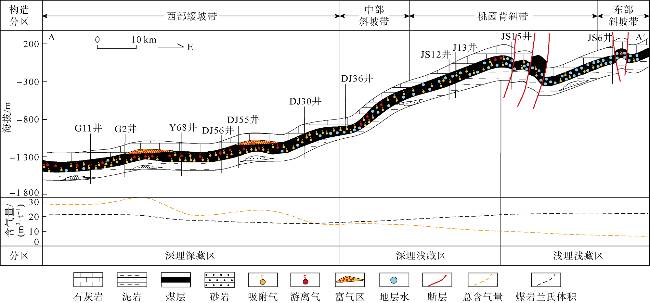
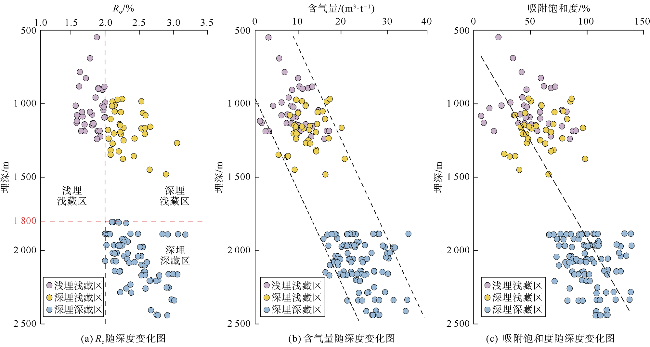
“同生”控制成煤作用、煤化历程和生烃期次,“异构”影响热演化程度、生烃强度与煤岩气产状的空间差异,决定了不同埋深和区域煤层(岩)气富集差异。研究区已有钻井的分析测试资料统计表明,深埋深藏区含气量为22~35 m3/t,吸附气饱和度为95%~100%;深埋浅藏区含气量在16~20 m3/t,吸附气饱和度为80%~95%;浅埋浅藏区最大埋深为2 200~3 000 m,含气量为8~16 m3/t,吸附气饱和度为50%~70%(见图5)。
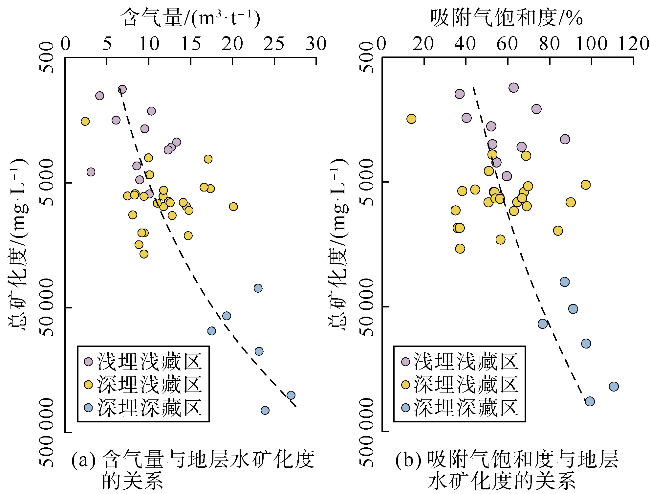
煤层水动力条件直接体现了流体系统封闭性,影响煤层(岩)气保存。抬升阶段后期,研究区东部边缘煤层因区域抬升暴露地表或断层沟通遭受不同程度水侵,原生煤层(岩)气藏封闭性被破坏,改造气水分布,影响含气性。浅埋浅藏区煤层水动力环境相对开放,遭受大气降水淋滤淡化,矿化度最低,水文交替活跃导致封闭性不佳,地层水矿化度主体小于0.5×10⁴ mg/L,含气性相对较低,大多小于15 m3/t(见图6a)。深埋浅藏区煤层水径流强度减弱,水文交替活跃度下降,地层矿化度整体呈增加趋势,在(0.5~5.0)×104 mg/L,含气量增加但变化范围较大,最大超20 m3/t,局部因断层影响接受垂向渗滤补给导致矿化度偏低,气体因封闭性差而难以保存,含气量仅2.41 m3/t(见图6a)。深埋深藏区8号煤层产出水总矿化度大于5×104 mg/L,且与含气量呈正相关关系,高地层水矿化度区域对应相对更高的含气量(见图6a)。深埋浅藏区和浅埋浅藏区吸附气饱和度均较为离散且相差较大,呈现出吸附气欠饱和特征,表明水动力活跃条件下煤层封闭性差,大量游离气和部分吸附气逸散,无法满足煤层原位条件下最大吸附能力。深埋深藏区煤层水滞留封闭,矿化度普遍较高,气体保存条件好,吸附气饱和度普遍较高,在75%以上,而且在部分地区呈现超饱和特征(见图6b)。
4 基于“同生异构”的开发实践
大吉区块不同埋深8号煤层均形成于为海陆过渡环境,但是地质历史时期煤层最大埋深、后期抬升程度、热演化程度、生排烃量等存在明显差异。“同生”体现在整个鄂尔多斯盆地具有相同的植物遗体堆积—泥炭化成煤过程,具有相似的缓慢沉降、快速埋藏、波动起伏、二次深埋演化历程。“异构”体现在两方面:①不同区带煤层最大历史埋深不同,影响煤岩变质程度和最大生烃量;②后期的构造抬升过程存在差异,形成了不同的构造形态,进而影响现今含气量。
4.1 煤层(岩)气开发效果
基于“同生异构”理论认识,优先在深埋深藏区实施规模建产工程,区内累计提交探明地质储量2 161.9×10⁸ m3。2021—2022年在区块西北部开展先导试验(见图1a),完钻井11口,平均水平段长1 260 m,首年平均日产气7.2×10⁴ m3,平均单井预测最终可采储量(EUR)为6 446×104 m3。截至2025年6月,生产时间为750~1 214 d,平均为852 d,单井平均累产3 762×104 m3,产气井10口,日产气31×104 m3,累产气4.1×10⁸ m3,取得了良好的开发效果。2022—2023年进一步在深埋深藏区先导试验区的南部开展先导扩大试验,投产22口井(其中4口井于2024年年底投产),平均水平段长1 229 m,18口井首年平均日产气4.7×10⁴ m3,18口井平均EUR为5 191×104 m3。
在深埋浅藏区和浅埋浅藏区尚未实现规模效益开发,需要进一步深入研究构造改造复杂区煤层(岩)气富集和产出的核心地质要素。这两个区域埋深小于1 500 m的煤层(5号煤和8号煤)总资源量为3 506×108 m3,已探明储量仅222.3×10⁸ m3,探明率为6.3%。煤层(岩)气富集和高产的关键控制因素仍有待进一步深入研究。
4.2 煤层(岩)气产出特征
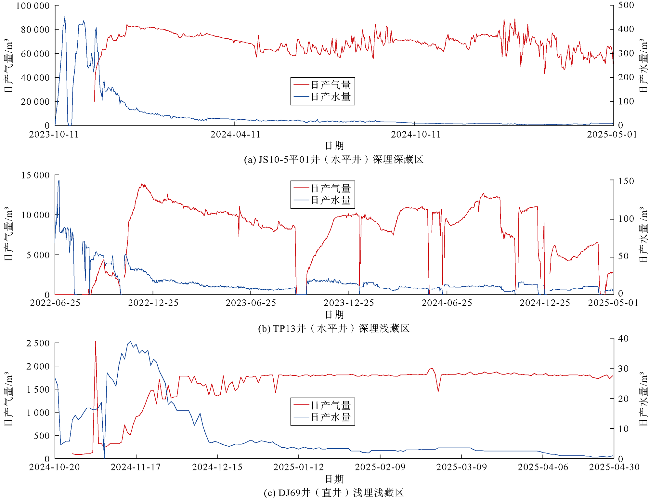
不同区带的煤层(岩)气产出存在明显差异(见图7),深埋深藏区具有高生气能力、高含气量、高地层水矿化度和高储层压力,具有高产气能力,水平井和直井初期产量分别超过5×104,1×104 m3/d;深埋浅藏区具有高生气能力,但是由于煤层抬升破坏,含气量降低,产气能力受含气性和保存条件存在差异,直井产气量在(0.5~1.0)×104 m3/d;浅埋浅藏区生气能力相对较低,现今含气量低,直井产气量一般小于0.5×104 m3/d。深埋深藏区JS10-5平01井(水平井)煤层埋深2 294.36 m,该部分水平段长1 388 m,加砂6 214 m3,加液42 320.4 m3,自2023年11月19日投产以来,累产气量3 648×104 m3,初期日产气8.88×10⁴ m3,平均日产气6.88×10⁴ m3。深埋浅藏区TP13井(水平井)煤层埋深1 299 m,水平段长919 m,加砂440.5 m3,加液3 004 m3,自2022年6月24日投产以来,累产气785×104 m3,初期日产气0.3×10⁴ m3,平均日产气0.8×10⁴ m3。浅埋浅藏区DJ69井(直井)煤层埋深为1 740 m,煤层含气量为20.10 m3/t,含气饱和度为84.55%,投产35 d后开始产气,初始日产气1 600~2 000 m3,累产气25×104 m3。


5 结论
大吉区块8号煤形成于晚石炭世潟湖—潮坪沉积环境,煤层连续性好、分布稳定,厚度为8~10 m,局部超过12 m。晚石炭世—二叠纪,地层缓慢沉降,煤岩Ro值普遍低于0.5%,生气量较低;三叠纪进入快速埋藏阶段,煤层开始进入成熟阶段;三叠纪末—侏罗纪煤岩Ro值主体为0.7%~1.0%,开始大量生烃;早白垩世进入二次深埋阶段,南部埋深达4 400 m,叠加异常古地热场作用,煤层进入裂解生气阶段,大部分地区Ro值大于2.0%;晚白垩世至今,煤层持续抬升,气体逸散调整。
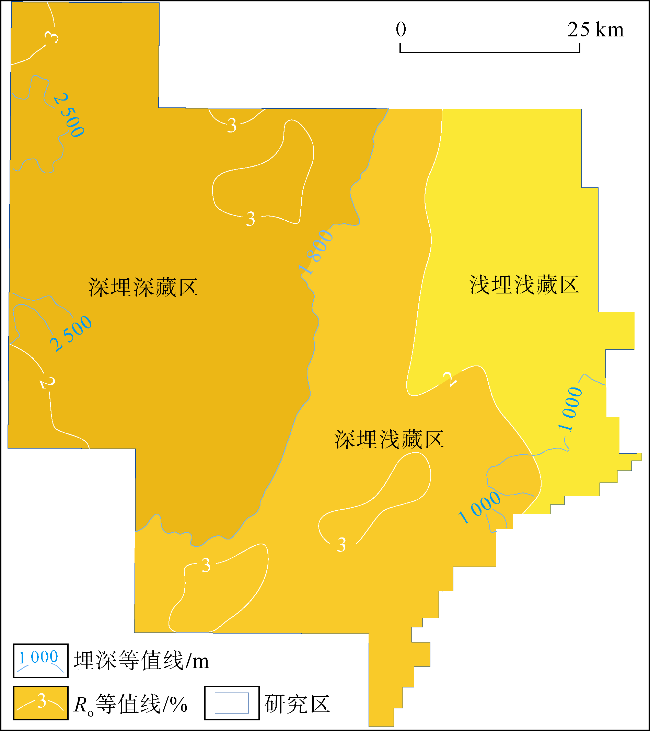
以Ro值为2.0%和埋深1 800 m为界,大吉区块可以分为深埋深藏、深埋浅藏和浅埋浅藏区,深埋深藏区含气量在22~35 m3/t,吸附气饱和度在95%~100%,呈现构造稳定—强封闭性特点,气井初期产气量高;深埋浅藏区含气量在16~20 m3/t,呈现局部改造—水力封堵成藏,游离气侧向逸散,吸附气留存;浅埋浅藏区含气量在8~16 m3/t,抬升强烈,地层封闭性差,原生气藏发生次生改造,游离气大幅逸散,吸附气部分散失。
“同生异构”是指同一盆地煤层经历相对一致的沉积演化过程和构造活动期次,但由于构造活动强度和应力场差异造成历史最大埋深(煤岩热演化程度)和现今煤岩气产状(煤层含气量及赋存状态)存在差异。“同生异构”影响煤层(岩)气富集和煤层(岩)气井产气表现,有效指导了煤层(岩)气开发实践。